
Search for “how to get rid of spider veins on legs” and you will find everything from apple cider vinegar to £1,000 treatment packages. Some of it works, some of it helps a little, and some of it is a waste of your money. If you are staring at a new cluster of red or purple lines on your thighs or calves and wondering what to do next, this guide sorts the useful from the hopeful.
We have compared seven non-surgical options, from things you can start today at home to professional treatments. For each one we cover what it can realistically do, who it suits, what it typically costs in the UK and where its limits are. We have also put the warning signs that need a doctor right at the top, because they matter more than anything else here.
A note on who wrote this. This guide comes from Bell Moon Aesthetics, a non-surgical aesthetics clinic in Mayfair, London. We offer laser vein removal, which features below as our recommended professional option for suitable thread veins. We do not diagnose vein conditions, and we say so wherever it matters.
In a hurry? Creams and supplements will not remove spider veins. Compression and movement can help slow new ones. Leg make-up hides them for the day. For lasting improvement, the main professional options are laser treatment and microsclerotherapy, and anyone with pain, swelling, bulging veins or skin changes should see a GP first.
Spider veins, thread veins or varicose veins?
Spider veins and thread veins are two names for the same thing: small, flat, red, blue or purple vessels close to the skin surface, often in a web or fan pattern. According to the NHS, they are usually harmless.
Varicose veins are different. They are larger, swollen and twisted, they often bulge above the skin, and they can cause aching, heaviness, itching and swollen ankles. They tend to be a sign that valves inside the vein are not working properly, and they need a different approach from the cosmetic treatments below.
Many people have a mix: a web of fine red veins with a slightly thicker blue vein running through or near it. That blue vein can be the one feeding the cluster, which is one of the reasons an assessment before treatment is so useful.
When to see a GP instead of a clinic
Please book a GP appointment before trying any treatment if you have:
- veins that bulge, feel lumpy or look twisted
- aching, heaviness, cramping or throbbing in your legs
- swelling in the ankles or lower legs
- itchy, dry, darkened or hardened skin near the ankle
- a sore on your leg that has not healed within two weeks
- veins that are getting noticeably worse
Get urgent help from your GP or NHS 111 if a vein is bleeding. If one leg becomes suddenly painful, swollen, warm or red, or you feel breathless or have chest pain, seek urgent medical care, as these can be signs of a deep vein thrombosis or a clot that has travelled.
A GP may refer you to a vascular specialist, who will usually arrange a duplex ultrasound scan to check the blood flow in your leg veins. The Circulation Foundation has clear patient information on what happens next.
The seven options compared
| Option | What it can do | Typical UK cost* | Removes veins? |
|---|---|---|---|
| 1. Laser vein removal | Fades fine red and purple veins without needles | A few hundred pounds per session upwards; Bell Moon from £660 | Yes, treated veins |
| 2. Microsclerotherapy | Seals blue and purple veins by injection | A few hundred pounds per session | Yes, treated veins |
| 3. Thermocoagulation | Seals very fine red veins in small areas | Often priced per short session | Yes, finest veins |
| 4. Compression stockings | Eases aching legs, supports aftercare | Tens of pounds a pair | No |
| 5. Movement and daily habits | May slow new veins, helps circulation | Free | No |
| 6. Leg make-up | Hides veins for the day | Under £40 | No |
| 7. Creams, oils and supplements | Moisturises skin; will not clear veins | Varies | No |
*Costs are broad, typical ranges for the UK as a rough guide only. Prices vary by provider, area treated and number of sessions, so always confirm the full price at consultation.
1. Laser vein removal (our recommended professional option)
Laser treatment sends controlled pulses of light into the skin. The blood inside the targeted vein absorbs that energy, the vein heats and collapses, and your body clears it away over the following weeks. Nothing is injected and the skin is not cut.
For fine red and purple spider veins, it is the option we recommend, and it is what we offer at Bell Moon Aesthetics. Here is what our treatment involves:
- Device: a Candela medical-grade laser system.
- Time: 15 to 30 minutes per session.
- Course: usually 2 to 4 sessions for the best result.
- Sensation: a mild snap, like an elastic band on the skin.
- Downtime: little to none, with any redness or swelling usually settling within hours.
- Price: treatments start from £660 (see our price list).
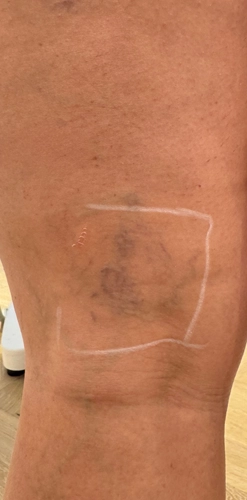
Who it suits: people with fine red or purple veins who would rather avoid needles and want to carry on with their day afterwards. Our own guidance notes it is especially suited to fair to medium skin tones, so if your skin is deeper or tanned, expect a more careful assessment and possibly a test patch.
Its limits: larger blue veins and veins fed from deeper down often do better with microsclerotherapy or a specialist route. Our founder, Mouna Bel Noufi, is an experienced aesthetics practitioner rather than a doctor or nurse, so if your consultation suggests an underlying vein problem we will ask you to see your GP before we treat. Find out more on our laser vein and capillary removal page.
2. Microsclerotherapy
A fine needle is used to inject a sclerosant solution into each vein, causing it to seal and fade over the following weeks. It is a well-established treatment and often the first choice for bluer, slightly larger thread veins and the small reticular veins that feed them. The Circulation Foundation explains the procedure in more detail.
Who it suits: people with blue or purple veins who are comfortable with small injections.
Its limits: bruising is common and compression stockings are usually needed afterwards. Brown staining along the vein and patches of new fine red vessels can occur and usually fade with time. Sclerosants are prescription-only medicines, so treatment must be overseen by a suitably qualified prescriber. Very fine red veins can be too small to inject easily, which is why some people combine microsclerotherapy with laser.
3. Thermocoagulation
A hair-fine probe delivers a tiny burst of heat to seal very small red veins. It is quick for a few vessels in a defined area, such as around the ankle or on the knee.
Who it suits: people with a small number of very fine red veins.
Its limits: it is not designed for larger or blue veins, treating a wide area takes a long time, and small scabs can appear over the treated points for a few days.
4. Compression stockings
Graduated compression stockings apply gentle pressure that is firmest at the ankle, helping blood move back up the leg. The NHS lists them among the treatments a specialist may offer for varicose veins, and they are often part of aftercare following vein treatments.
What they can and cannot do: they can ease heaviness and aching, and many people find them helpful on long flights or long shifts. They will not make existing spider veins disappear.
A safety point: compression is not suitable for everyone. If you have problems with the arteries in your legs, diabetes or numbness in your feet, ask your GP or pharmacist before buying a pair, and get measured so the fit is right.
5. Movement and daily habits
The NHS advice for vein symptoms is refreshingly simple: stay active, keep to a healthy weight, put your legs up when you can, avoid standing or sitting for long periods and do not smoke. Walking is particularly useful because the calf muscles act as a pump for the veins.
What it can and cannot do: these habits will not clear the spider veins you already have, and genetics, hormones and pregnancy play a big part regardless. They can, however, support your circulation and may help slow the appearance of new veins. If you work on your feet, even short walks and calf raises through the day make a difference to how your legs feel.
Sun protection counts too. Sun damage can make small surface vessels more visible, so use sunscreen on exposed legs, especially after any treatment.
6. Leg make-up and colour correction
Body foundations and colour correctors made for legs can cover spider veins surprisingly well. A peach or orange-toned corrector under a skin-matched foundation tends to neutralise blue and purple tones, and a light setting spray helps it last.
What it can and cannot do: it gives you an instant result for an event and costs very little. It is temporary, it can rub off on clothing and it needs reapplying every time.
7. Creams, oils and supplements
This is where most of the online advice lives, and where most of the disappointment comes from. No cream, serum, essential oil or apple cider vinegar rub has been shown to remove spider veins. Some products may temporarily reduce redness or make skin look smoother, and a good moisturiser helps if the skin on your legs is dry or itchy, which the NHS recommends for people with vein symptoms.
Some supplements are sold for “leg circulation”. If you are thinking about taking one, speak to a pharmacist first, particularly if you take other medicines, because herbal products can interact with them. Do not expect any supplement to change how your spider veins look.
How to decide
- Check for warning signs. If any of the symptoms listed above apply, see your GP first.
- Look at the colour and size of your veins. Fine red and purple veins generally suit laser. Blue or thicker veins often suit microsclerotherapy.
- Think about needles and downtime. If you want no injections and no compression stockings, laser is the natural choice for suitable veins.
- Add the everyday habits. Movement, sun protection and, where appropriate, compression support any treatment you choose.
- Plan the timing. Autumn and winter are the easiest seasons for treatment, while your legs are untanned and covered up.
If you are in London and want to compare the professional treatments in more depth, our guide to the best leg thread vein removal treatments in London ranks them side by side.
Frequently asked questions
Can spider veins on legs go away on their own?
In most cases, no. Spider veins tend to stay, and new ones can appear over time. Lifestyle changes may slow new veins but will not usually clear existing ones.
What is the fastest way to get rid of spider veins?
For an instant result, leg make-up. For a lasting improvement, professional treatment such as laser or microsclerotherapy, with the veins fading over the weeks after each session.
Is laser or injection better for spider veins?
Laser generally suits fine red and purple veins and people who want to avoid needles. Injections often suit blue or slightly larger veins. An assessment will show which is right for your legs, and sometimes the answer is both.
What causes spider veins on the legs?
Common factors include genetics, hormonal changes (including pregnancy), ageing, long periods of standing or sitting, carrying extra weight and sun exposure. Sometimes they are linked to a vein problem deeper in the leg, which is why checking for symptoms matters.
Are spider veins dangerous?
Spider veins on their own are usually harmless. Symptoms such as pain, swelling, bulging veins, skin changes or sores are a reason to see a GP.
How much does spider vein removal cost?
Professional treatments in the UK typically cost a few hundred pounds per session, and most people need more than one session. At Bell Moon Aesthetics, laser vein removal starts from £660. Always ask for the full course price before you begin.
Will treated spider veins come back?
Treated veins do not usually return, but new ones can still develop, so some people choose occasional top-up treatments in later years.
Can I have spider vein treatment while pregnant?
Cosmetic vein treatments are generally postponed during pregnancy, and many pregnancy-related veins improve in the months after birth. Discuss timing at your consultation.
The bottom line
You do not need surgery to improve spider veins on your legs, but you do need realistic expectations. Home habits and compression help your legs feel better and may slow new veins. Make-up hides them. Creams will not remove them. For lasting improvement, professional treatment is the answer, after a check that nothing more serious is going on.
For fine red and purple spider veins, Bell Moon Aesthetics recommends laser vein removal. We use a Candela laser at 15 Hanover Square, Mayfair, with short sessions, little to no downtime and treatments from £660, and we will point you to your GP first if your legs need a medical opinion.
Results vary from person to person, and a consultation is required before any treatment. To have your veins assessed, book a consultation with Bell Moon Aesthetics.