Sun spots have a particular way of announcing themselves. You get to the end of August, the tan starts to fade, and what is left behind is a scatter of flat brown marks across the cheekbones, the bridge of the nose, the backs of the hands and the chest. They were not there in May. They were, in fact, laid down over years of accumulated ultraviolet exposure, and this summer simply brought them to the surface.
The good news is that sun spots, known medically as solar lentigines, are among the most treatable forms of pigmentation. The cause is straightforward, the pigment sits where lasers and light devices can reach it, and results tend to arrive faster than they do for hormonally driven pigmentation. The catch is that a small proportion of brown marks are not sun spots at all, and telling the difference is a job for a trained eye rather than a mirror.
This guide compares five London clinics treating sun spots and sun damage, with the technology each uses, who each suits and what it costs. Bell Moon Aesthetics is our own clinic and we have placed ourselves first. We set out the reasoning, and the cases where you should go elsewhere, in that entry.
Read this before you book anything
Not every brown mark is a sun spot. Solar lentigines are flat, evenly coloured, well defined and stable over time. A mark that behaves differently deserves a medical opinion before any cosmetic treatment, specifically one that is:
- new in adulthood and growing, or changing in shape
- irregular or blurred at the border
- made up of more than one shade of brown, black, red or blue
- larger than about 6mm across
- itching, crusting, bleeding or failing to heal
- noticeably unlike every other mark on your skin
A laser will clear the visible pigment from a lesion whether or not that lesion was benign, and in doing so it removes the very thing a dermatologist needed to look at. See your GP or a consultant dermatologist first. Any clinic worth using will decline to treat a mark it is unsure about and refer you on, and two of the clinics below say so explicitly in their own published material.
How we chose the clinics on this list
- Assessment before treatment. The clinic checks what the mark is before treating it, and has a route to a medical opinion when something looks wrong.
- Technology matched to the job. Q-switched and picosecond lasers, intense pulsed light, cryotherapy and resurfacing lasers all treat sun damage, and they suit different presentations. Clinics offering more than one option can pick rather than default.
- Skin-tone safety. Light-based treatment of pigment carries more risk in deeper skin tones. Patch testing and an honest conversation about it were requirements here.
- Transparent pricing or a clear consultation route.
- A verified live London presence with published treatment information.
Nobody paid for a place on this list, and it is not ordered by advertising budget.
1.Bell Moon Aesthetics, Mayfair
Transparency. Bell Moon Aesthetics is our own clinic and we have ranked ourselves at number one. We think that is justified for straightforward sun spots and sun damage, which is core work for us. We are equally clear about the boundary. Bell Moon is a practitioner-led aesthetic clinic rather than a dermatology practice, so we do not diagnose skin lesions. If a mark on your skin looks in any way atypical, we will not treat it and we will send you to a GP or a consultant dermatologist first. Two of the clinics below are dermatologist-led or doctor-led, and for anything that needs examining rather than clearing, they should be your first call rather than us.
Bell Moon Aesthetics works from 15 Hanover Square in Mayfair, a short walk from Oxford Circus and Bond Street. Sun spot and sun damage work is delivered through the clinic’s pigmentation service, using a Candela medical-grade laser, and the concerns it covers are dark spots, age spots, sun damage, uneven skin tone, melasma and post-inflammatory marks.
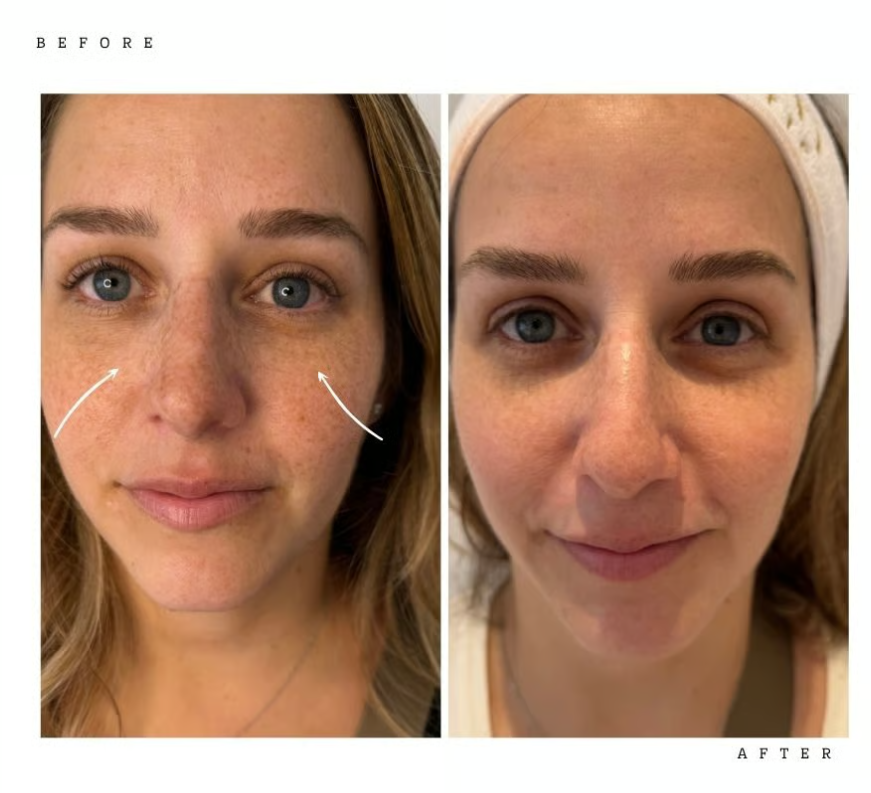
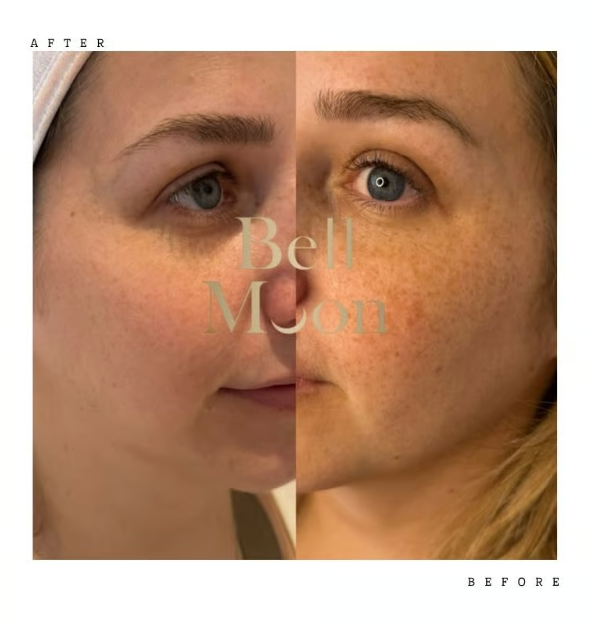
A session takes around 30 to 45 minutes. Most people are advised to plan for three to six sessions spaced a few weeks apart, and treatment starts from £550. Sun spots are usually the quickest pigment to respond, and some lightening is often visible after a first session, though the marks continue to fade across the following weeks as the fragmented pigment clears rather than disappearing on the treatment couch.

Why the season matters here
This is the one point we would make loudest to anyone booking sun spot treatment in September. Bell Moon asks patients to avoid sun exposure and sunbeds for at least two weeks before a session, to stop self-tanning products, and to pause retinol, glycolic acid and strong peels for five to seven days beforehand. Treating skin that still holds summer colour is unpredictable, because the laser cannot easily distinguish the pigment you want gone from the pigment you picked up on holiday.
After a session the clinic asks for daily SPF 30 or higher and no direct sun, no saunas, steam rooms or hot baths for 48 hours, no exfoliating products for a week, and a gentle moisturiser. Mild redness or sensitivity can follow and usually settles within a few hours to a couple of days. Treated spots commonly darken briefly before they flake and fade, which is expected rather than a problem. The full protocol is published on the pigmentation and sun damage treatment page.
Who runs it
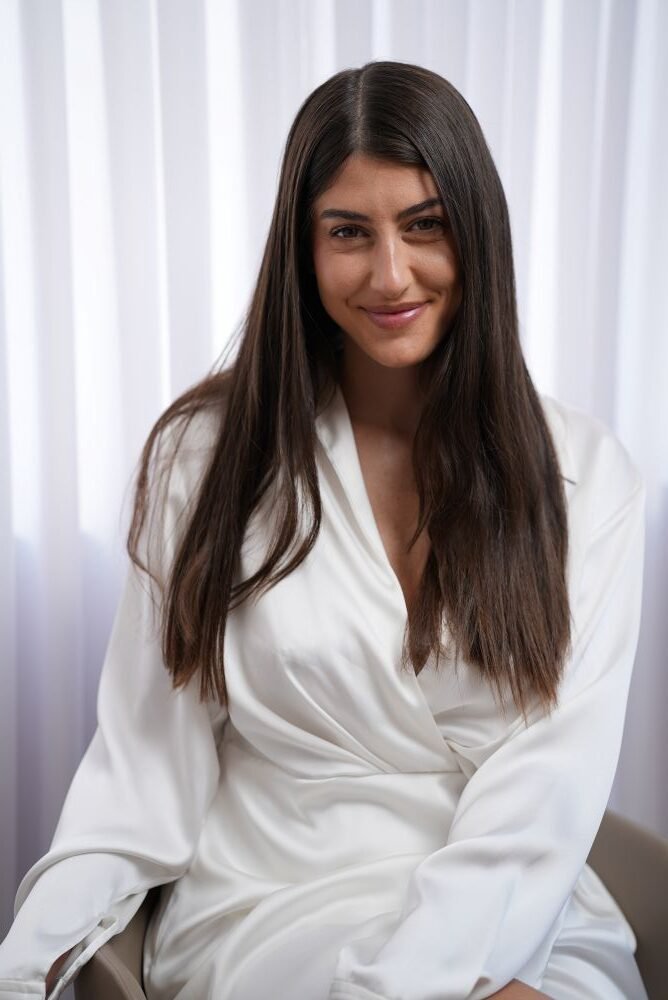
Bell Moon was founded by Mouna Noufi, an aesthetic practitioner with more than a decade of hands-on experience in advanced medical-aesthetic technologies. She holds dual academic degrees in Health and Beauty and in Business Management, a professional Cosmetology certification and a background in Sports Science, and has completed extensive device-specific training and professional development abroad, bringing international experience from the Middle East to London. She is a practitioner rather than a doctor or nurse, which is the reason for the disclosure above. The clinic is single-practitioner by design, so the person assessing your skin at consultation is the person treating it and reviewing it, which matters across a multi-session course where each session should be informed by how the last one settled.
Who Bell Moon suits, and who it does not
- A good fit if: you have flat, stable, clearly benign sun spots or general sun mottling on the face, chest or hands, you want a central London course with the same practitioner throughout, and you are willing to commit to daily sun protection afterwards.
- Not the right first stop if: any mark is new, changing, irregular or multi-coloured, you want a mole check or a lesion examined rather than cleared, or you need cryotherapy or a biopsy. Go to a dermatologist-led clinic for those.
Sun damage rarely arrives alone, so related services often run alongside a sun spot course, including microneedling for overall texture, skin boosters and Profhilo for hydration and quality, and laser vein and capillary removal for the broken capillaries that frequently accompany long-term sun exposure across the cheeks and nose. Current prices are on the pricing page.
Results vary from person to person, and depend on your skin tone, the depth of the pigment and how consistently you protect the skin afterwards. A consultation is required before any treatment so suitability can be assessed. You can book one here.
2.Dr Joney De Souza Skin and Laser Clinic, Marylebone
At 49 Blandford Street in Marylebone, this clinic makes the strongest published case for assessment before treatment of anyone on the list. Its own page on age spots puts it plainly, noting that not every brown mark is an age spot and that the marks which look similar, from melasma to the rare mark that needs a doctor rather than a laser, each ask for a different response.
The technology is broad enough to act on that principle. PicoSure picosecond laser handles individual spots, MaxG intense pulsed light covers more widespread damage, UltraClear laser resurfacing addresses texture alongside pigment, and ZO Skin Health peels and topical protocols support the device work. The clinic patch tests for darker skin tones and refers suspicious marks to a GP before treating. Dr De Souza describes a less-is-more philosophy as the mainstay of the practice, which in a field full of upselling is worth something.
Best for: anyone who is not certain what their marks are, and anyone with a deeper skin tone who wants patch testing taken seriously. Less suited to: someone who has already been assessed and simply wants the cheapest single-lesion clearance.
3.The Dermatology Clinic, Harley Street
The Dermatology Clinic at 55 Harley Street is led by Dr Daniel Glass, a GMC-registered consultant dermatologist, and it is the entry to choose when the question is medical before it is cosmetic. Its published page on solar lentigos and freckles addresses the diagnostic issue directly, advising patients to seek medical advice promptly about suspicious lesions and noting that a biopsy may be required where a brown spot has irregular features.
For confirmed solar lentigines it offers five routes rather than one: chemical peels, cryotherapy with liquid nitrogen, laser, lightening creams and intense pulsed light. Cryotherapy in particular is a genuinely useful option that most aesthetic clinics do not provide, and having a consultant able to examine, treat and biopsy under one roof removes a referral step.
Best for: marks you are worried about, anyone with a personal or family history of skin cancer, and patients who want a consultant dermatologist’s diagnosis before treatment. Less suited to: purely cosmetic, low-cost clearance of a few obviously benign marks, where consultant-level fees may be more than you need.
4.Rejuva London, Harley Street
Rejuva London sits at 15 Harley Street and is led by medical director Dr Kristy Lau, with a team the clinic describes as doctors and dermatologists each with more than ten years of experience. Its sun spot page is device-focused and specific.
Treatment runs on PicoSure Pro laser, which works by breaking down the pigment in sun spots, and Stellar M22 intense pulsed light, which targets pigmented cells more broadly, with chemical peels available alongside. The clinic indicates that most patients see improvement after three to five sessions depending on how pronounced the pigmentation is. Pricing is not published on the sun spots page itself and is handled through a separate price list and consultation.
Best for: patients who want current-generation picosecond and IPL platforms in a Harley Street setting with medical oversight. Less suited to: anyone who wants a firm price before making contact.
5.Centre for Surgery, Marylebone
Centre for Surgery, at 95 to 97 Baker Street in Marylebone, is the most price-transparent clinic on this list, which makes it a useful benchmark even if you end up elsewhere. It is CQC regulated and inspected with a Good rating, and treatment is delivered by GMC-registered practitioners.
Its laser pigmentation service runs on the Fotona SP Dynamis platform with multiple wavelengths including Q-switched and Nd:YAG options, and it describes age spots precisely as flat brown patches on the face, hands, forearms and chest caused by cumulative sun exposure over decades. Most patients are told to expect three to six sessions spaced four to six weeks apart, while single isolated age spots may resolve in one to two. Published pricing starts from £150 per session for a single lesion, with a course of three at £400, from £350 per session for half-face sun damage with a course of three at £900, and from £500 per session for full-face treatment with a course of three at £1,250.
Best for: one or two isolated age spots where a full-face course would be overkill, and anyone who wants to see the numbers before booking. Less suited to: patients specifically seeking a single named practitioner throughout a course.
The five clinics compared
| Clinic | Area | Technology for sun spots | Best for | Indicative price |
|---|---|---|---|---|
| Bell Moon Aesthetics | Mayfair, W1 | Candela medical-grade laser | Straightforward sun spots and sun mottling, one practitioner throughout | From £550 |
| Dr Joney De Souza | Marylebone, W1 | PicoSure, MaxG IPL, UltraClear, ZO peels | Marks you are unsure about, deeper skin tones | On consultation |
| The Dermatology Clinic | Harley Street, W1 | Cryotherapy, laser, IPL, peels, lightening creams | Anything needing a consultant dermatologist’s diagnosis | On consultation |
| Rejuva London | Harley Street, W1 | PicoSure Pro, Stellar M22 IPL, peels | Current-generation platforms with medical oversight | On consultation |
| Centre for Surgery | Marylebone, W1 | Fotona SP Dynamis, Q-switched and Nd:YAG | Isolated spots and transparent pricing | From £150 per lesion |
What sun spots actually are
Solar lentigines are flat, well-defined brown patches produced where melanocytes have been repeatedly stimulated by ultraviolet light over years. They collect on the areas that take the most exposure, which is why they appear on the face, the chest, the shoulders, the forearms and above all the backs of the hands, an area most people never think to protect. The common name age spot is slightly misleading, because the driver is accumulated sun rather than age itself. Age is simply how long the exposure has had to add up.
Why they seem to appear overnight after summer
They rarely do. A summer of higher ultraviolet exposure stimulates existing clusters of pigment-producing cells to produce more melanin, so marks that were faint in spring become obvious by September. The surrounding tan then fades faster than the spots do, and the contrast makes them stand out further. That is the moment most people book a consultation, and it happens to be good timing, because treatment is generally more predictable once the tan has gone.
Sun spots compared with the things that resemble them
- Freckles are smaller, appear earlier in life, are more common on fair skin, and darken in summer then fade in winter. Sun spots do not fade back.
- Melasma forms larger symmetrical patches, is hormonally driven as well as sun driven, and behaves very differently under treatment. Treating melasma as if it were a sun spot is a common way to make it worse. We cover it in our companion guide to pigmentation treatment in London.
- Seborrhoeic keratoses are raised and slightly rough or waxy rather than flat, and are removed by different methods.
- Actinic keratoses are rough, scaly patches on sun-exposed skin, and they are a medical matter rather than a cosmetic one because they sit on a pre-cancerous spectrum.
- Lentigo maligna is a rare, slow-growing melanoma in situ that can resemble a large irregular sun spot on the face in older skin. This is precisely why atypical marks must be examined and not lasered.
What treatment actually involves
Laser and intense pulsed light
The most common route. Q-switched and picosecond lasers deliver very short pulses that fragment the pigment so the body can clear it, while intense pulsed light covers wider areas of diffuse damage in a single pass. Treated spots typically darken and form a fine crust before flaking away over one to two weeks. Expect a course rather than a single visit for anything widespread.
Cryotherapy
Liquid nitrogen applied to individual lesions, offered by dermatology-led clinics such as The Dermatology Clinic. Efficient for isolated spots, though it needs care in deeper skin tones because it can leave a pale mark behind.
Peels and topical agents
Chemical peels and prescription or cosmeceutical brightening agents work more gradually and suit diffuse mottling better than sharply defined individual spots. They are often used to maintain a result achieved with a device.
The part that is not a treatment
Daily broad-spectrum SPF is the only thing that stops new sun spots forming and old ones returning. Clearing them without changing the sun protection habit means paying to treat the same skin again in a few years. Do not neglect the backs of the hands, which take a great deal of ultraviolet exposure through car windows and get sunscreen washed off them all day.
A short chooser
- A mark is new, changing, irregular or multi-coloured: The Dermatology Clinic, or your GP. Nothing else on this list comes first.
- You are not sure what your marks are and have a deeper skin tone: Dr Joney De Souza, for the assessment-first approach and patch testing.
- One or two isolated, obviously benign spots and you want a published price: Centre for Surgery, from £150 per lesion.
- General post-summer sun mottling across the face, chest or hands, and you want continuity of practitioner in central London: Bell Moon Aesthetics.
- You want current picosecond and IPL platforms with medical oversight on Harley Street: Rejuva London.
Frequently asked questions
How much does sun spot removal cost in London?
Single isolated lesions start from around £150 per session at Centre for Surgery, rising to £500 per session for full-face sun damage there. Course-based pigmentation treatment at Bell Moon Aesthetics starts from £550. Several clinics quote on consultation, because the price depends heavily on how much area is being treated.
How many sessions will I need?
Three to six sessions is the usual range for widespread sun damage, spaced a few weeks apart. A single well-defined spot may clear in one to two sessions. Rejuva London indicates three to five for most patients.
Does sun spot removal hurt?
Most people describe laser and IPL pulses on pigment as a brief snap, similar to a flick of an elastic band, rather than as painful. Sessions are short, and mild redness afterwards typically settles within hours to a couple of days.
Will the spots come back?
Treated spots do not usually return, but new ones will form if ultraviolet exposure continues unprotected, and the same skin that produced the first crop is capable of producing more. Daily SPF is what holds the result.
Is it safe on darker skin?
It can be, but light-based treatment of pigment carries a higher risk of post-inflammatory hyperpigmentation in deeper skin tones, so settings, device choice and patch testing all matter more. Ask directly about the practitioner’s experience with your Fitzpatrick type, and treat any clinic that brushes the question aside as a warning sign.
When is the best time of year to treat sun spots?
Autumn and winter, generally. Treating recently tanned skin is less predictable and post-treatment sun exposure works against the result. September onwards, once the summer tan has faded, is the natural window.
Can I have treatment on the backs of my hands?
Yes, and hands are one of the most common areas people ask about, because they often show sun damage earlier and more obviously than the face. Discuss the area at consultation, since skin on the hands heals a little more slowly than facial skin.
The bottom line
Sun spots respond well to treatment, which is exactly why the important decision happens before any device is switched on. Get the marks looked at properly, rule out anything that needs a dermatologist, and then choose the clinic that fits the job: a consultant for anything uncertain, a transparent per-lesion price for one or two isolated spots, or a paced course for general post-summer sun damage.
Bell Moon Aesthetics is first on this list for that last group. We treat sun spots and sun damage with a Candela medical-grade laser at our Hanover Square clinic in Mayfair, across three to six sessions from £550, with the same practitioner from consultation through to review. We will also tell you plainly when a mark should be seen by a doctor before it is treated by us.
Results vary from person to person, and a consultation is required before any treatment. To have your skin assessed, get in touch with Bell Moon Aesthetics.